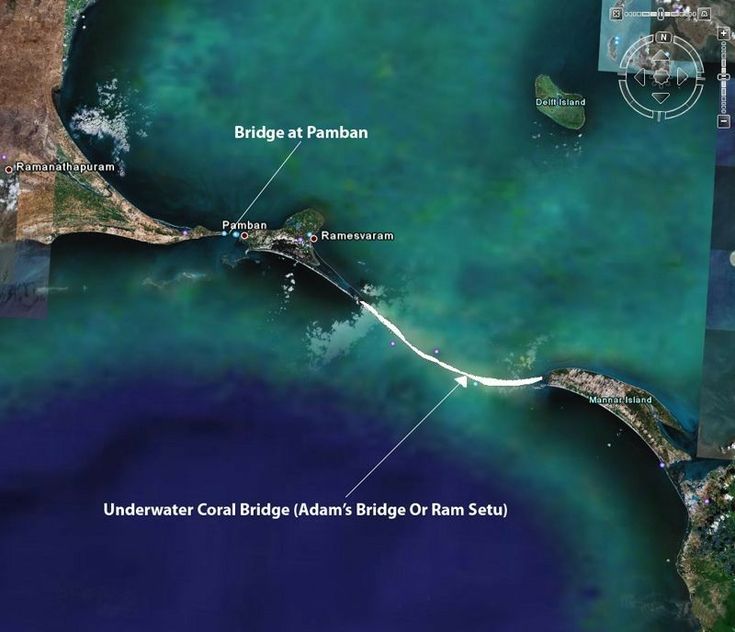
Where mythology meets geology — a 48 km chain of limestone shoals that has mystified scientists, archaeologists, and believers for centuries.
Introduction
Thousands of years ago, according to the ancient epic Ramayana, Lord Rama built a massive bridge across the ocean to reach Sri Lanka and rescue his wife Sita from the demon king Ravana.
This bridge, known as Ram Setu, still exists between Rameswaram and Mannar Island. Many believe it is one of the greatest mysteries connecting mythology with real geography.
What is Ram Setu?
Ram Setu is a chain of limestone shoals Stretching 48 kilometers across the shimmering waters between India and Sri Lanka lies a structure that has captivated the human imagination for millennia — Ram Setu. Known also as Adam’s Bridge, this ancient chain of shoals is at the center of one of the world’s most compelling unsolved mysteries: was it built by a god, or formed by nature?
48 kmTotal length
7,000 Years old (est.)
1–10 m Water depth
1480Last walkable year
The Legend
The Ramayana and the divine bridge
The oldest known account of Ram Setu comes from the Valmiki Ramayana — the timeless Sanskrit epic believed to date between the 7th century BCE and 3rd century CE. According to this sacred text, Lord Rama, an avatar of Vishnu, needed to cross the ocean to Lanka to rescue his abducted wife, Goddess Sita, from the demon king Ravana. Guided by the divine architect Nala, a vast army of Vanaras (monkey warriors) gathered rocks and boulders. Miraculously, when the name “Rama” was inscribed on the stones, they floated on water — and a bridge was born.
|”In Valmiki’s Ramayana, the bridge is described as Sethubanthan — the binding of the sea. Devotion, tenacity, and divine intervention were its pillars.”
— Valmiki Ramayana, Yudhakanda
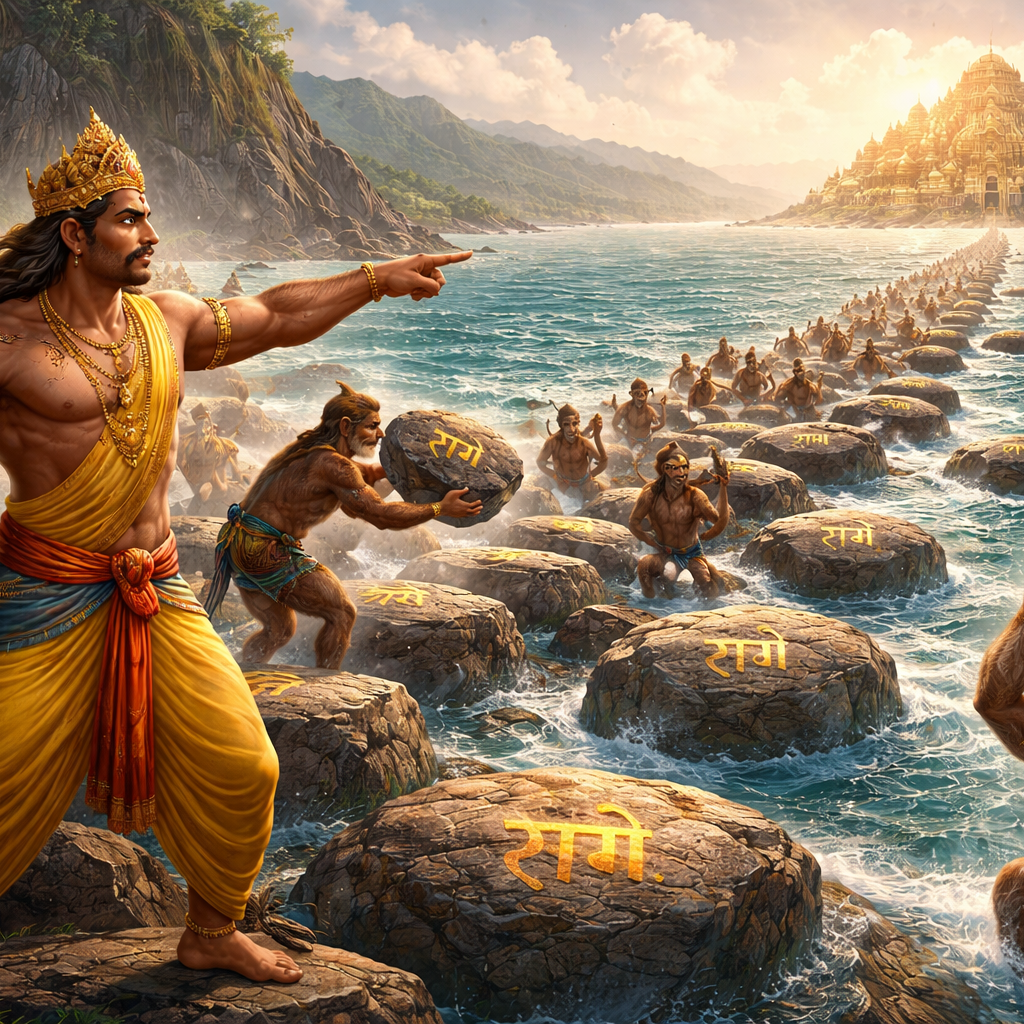
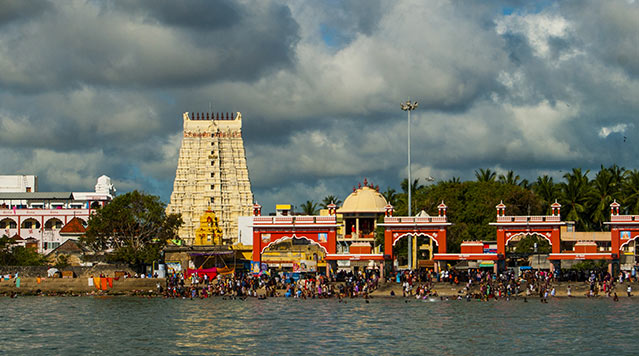
The bridge is therefore also called Nala Setu (after the architect Nala) and Setu Banda. For hundreds of millions of Hindus, the bridge is not mythology — it is history and sacred geography. Pilgrims still travel to Rameswaram’s Ramanathaswamy Temple today, where floating stones are exhibited as physical proof of this divine event.
The Mystery
Why this structure defies easy explanation
🪨
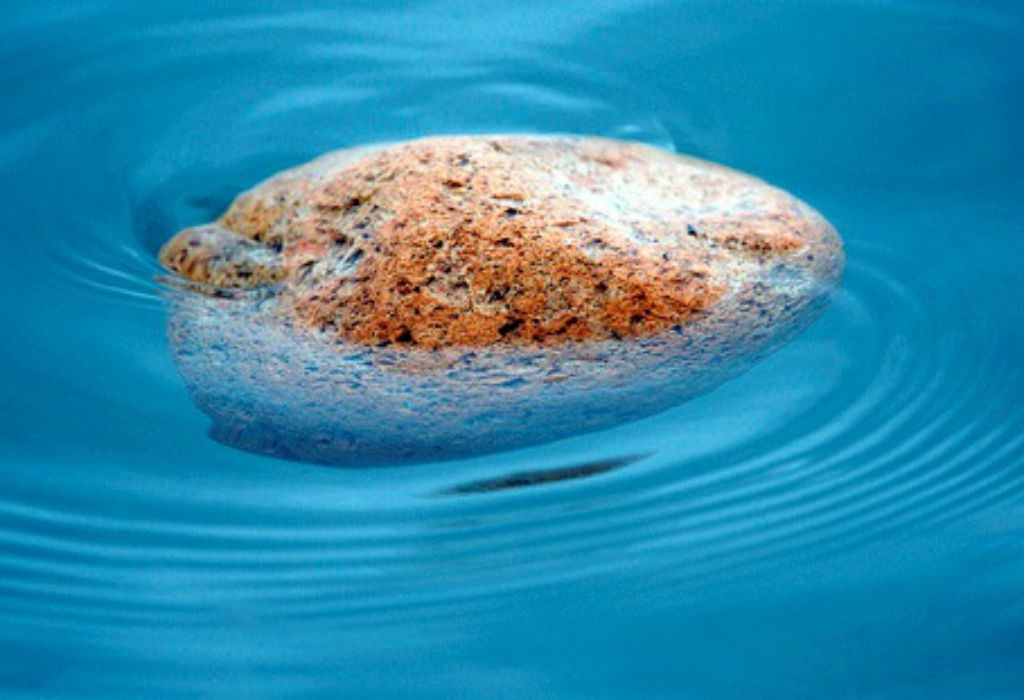
Floating stones
Pumice-like stones found near Rameswaram appear to float on water — a phenomenon still witnessed by visitors and cited in Hindu scripture.
🛰️
NASA satellite evidence
2002 NASA satellite images revealed a clear chain of shoals connecting India and Sri Lanka, reigniting global debate about the bridge’s origins.
⏳
Carbon dating sync
Carbon analysis of the rocks dates them to approximately 5,000–7,000 years ago — a period that aligns with traditional Ramayana timelines.
🔬
Anomalous geology
Dr. Badrinarayanan of the Geological Survey of India found loose sand beneath solid rock layers — a formation unusual for natural geological processes.
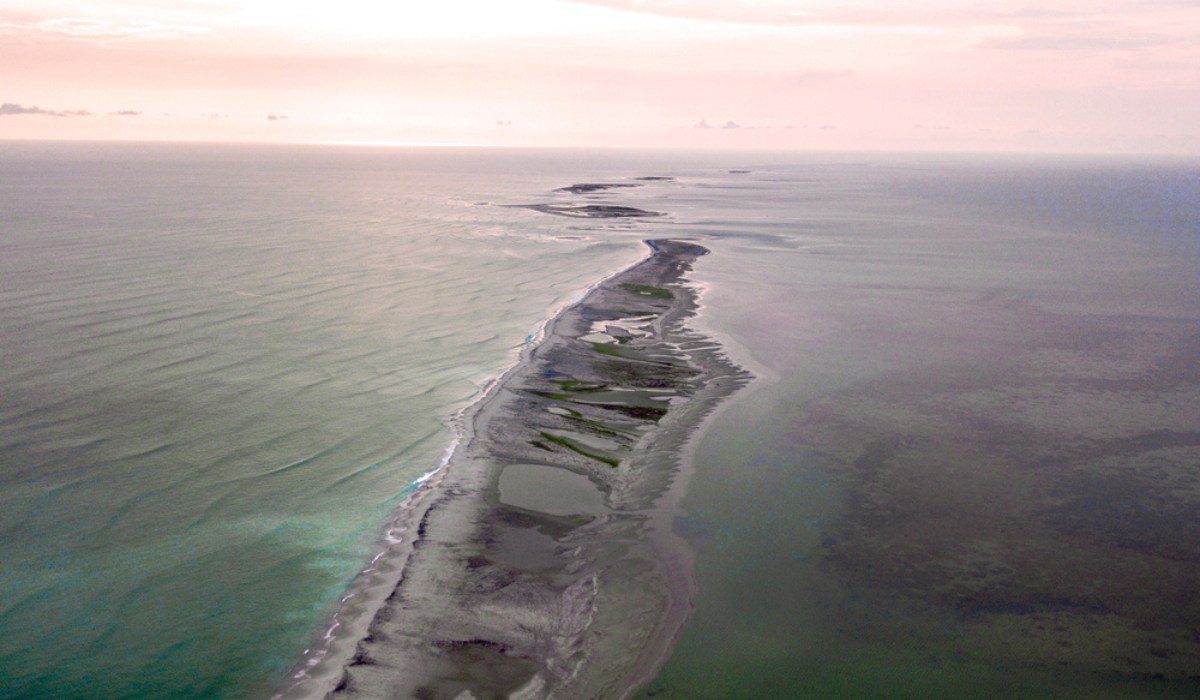
Modern research suggests the structure might be around 7000 years old. Satellite images show a clear chain-like structure under the ocean.
Some scientists believe:
- It could be a natural formation
- Others think it might have been modified by humans long ago
This is why Ram Setu remains one of the greatest mysteries.
Other Faiths
Adam’s Bridge — the Islamic and Christian connection
The name “Adam’s Bridge” comes from a parallel tradition in Abrahamic faiths. The 9th-century Persian geographer Ibn Khordadbeh referred to the structure as Set Bandhai — “Bridge of the Sea.” According to Islamic tradition, after being expelled from Paradise, Adam landed at Adam’s Peak in Sri Lanka and used this very bridge to cross over to India, where he began his earthly life. The Al-Biruni writings of c. 1030 CE popularised the name “Adam’s Bridge” in western cartography, first appearing on a British map around 1804. The structure is thus considered sacred across four religions: Hindu, Muslim, Christian, and Buddhist.
Religious Importance
Ram Setu is extremely sacred for Hindus.
Pilgrims visiting Ramanathaswamy Temple often visit the nearby coast where the bridge begins.
It symbolizes:
✨ Faith
✨ Devotion
✨ Victory of good over evil
Conclusion
The story of Ram Setu connects mythology, faith, and science. Whether viewed as a divine creation or a natural wonder, it continues to inspire millions of people around the world.
The bridge of Lord Rama remains one of the most fascinating mysteries in human history.